
New Paragraph

Mortgage Deferrals Now Recorded on Credit Reports

Cory Vance • August 19, 2020

If COVID-19 has negatively impacted your finances and you're currently deferring your mortgage payments, you should know that this will be visible on your credit report. Here is an image from a recent credit report.
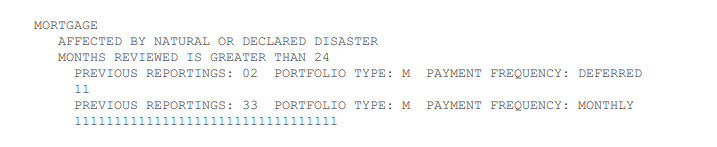
In this scenario, it shows that the mortgage was paid as agreed monthly for 33 months before being deferred for the last two months. It also shows that mortgage payments are currently in deferral.


Some may consider the credit bureau reporting a deferred status as good news. As COVID-19 hit like a freight train, many financial experts wondered about reporting errors on credit bureaus as a result of deferred payments. The fact that there is a system in place to report deferrals is a good sign.


Deferring your mortgage payment won't lower your credit score, but reporting errors from deferrals might. Once you've resumed your payments, it's a good idea to get a copy of your credit report to check for errors.


So, why does this matter to me now?


If you're considering a change to your mortgage, most lenders will be very hesitant to consider lending you new money when you aren't able to make your existing mortgage payments. This will be the case if you are looking to purchase a new property, renew, or refinance your current mortgage.


In fact, some lenders expect to see a history of regular repayment on any previously deferred loans before proceeding with any new application. Length of time after deferral varies by lender. This would include any debt payments (loan, line of credit, credit card) that have been deferred as well.


If changes to your mortgage are on the horizon, you need to have resumed all your regular debt payments before it will be possible to secure new mortgage financing.


If you'd like to discuss your personal financial situation with me, please contact me anytime!

Share

RECENT POSTS  


By Cory Vance December 2, 2025
Starting from Scratch: How to Build Credit the Smart Way If you're just beginning your personal finance journey and wondering how to build credit from the ground up, you're not alone. Many people find themselves stuck in the classic credit paradox: you need credit to build a credit history, but you can’t get credit without already having one. So, how do you break in? Let’s walk through the basics—step by step. Credit Building Isn’t Instant—Start Now First, understand this: building good credit is a marathon, not a sprint. For those planning to apply for a mortgage in the future, lenders typically want to see at least two active credit accounts (credit cards, personal loans, or lines of credit), each with a limit of $2,500 or more , and reporting positively for at least two years . If that sounds like a lot—it is. But everyone has to start somewhere, and the best time to begin is now. Step 1: Start with a Secured Credit Card When you're new to credit, traditional lenders often say “no” simply because there’s nothing in your file. That’s where a secured credit card comes in. Here’s how it works: You provide a deposit—say, $1,000—and that becomes your credit limit. Use the card for everyday purchases (groceries, phone bill, streaming services). Pay the balance off in full each month. Your activity is reported to the credit bureaus, and after a few months of on-time payments, you begin to establish a credit score. ✅ Pro tip: Before you apply, ask if the lender reports to both Equifax and TransUnion . If they don’t, your credit-building efforts won’t be reflected where it counts. Step 2: Move Toward an Unsecured Trade Line Once you’ve got a few months of solid payment history, you can apply for an unsecured credit card or a small personal loan. A car loan could also serve as a second trade line. Again, make sure the account reports to both credit bureaus, and always pay on time. At this point, your focus should be consistency and patience. Avoid maxing out your credit, and keep your utilization under 30% of your available limit. What If You Need a Mortgage Before Your Credit Is Ready? If homeownership is on the horizon but your credit history isn’t quite there yet, don’t panic. You still have a few options. One path is to apply with a co-signer —someone with strong credit and income who is willing to share the responsibility. The mortgage will be based on their credit profile, but your name will also be on the loan, helping you build a record of mortgage payments. Ideally, when the term is up and your credit has matured, you can refinance and qualify on your own. Start with a Plan—Stick to It Building credit may take a couple of years, but it all starts with a plan—and the right guidance. Whether you're figuring out your first steps or getting mortgage-ready, we’re here to help. Need advice on credit, mortgage options, or how to get started? Let’s talk.
By Cory Vance November 18, 2025
Wondering If Now’s the Right Time to Buy a Home? Start With These Questions Instead. Whether you're looking to buy your first home, move into something bigger, downsize, or find that perfect place to retire, it’s normal to feel unsure—especially with all the noise in the news about the economy and the housing market. The truth is, even in the most stable times, predicting the “perfect” time to buy a home is incredibly hard. The market will always have its ups and downs, and the headlines will never give you the full story. So instead of trying to time the market, here’s a different approach: Focus on your personal readiness—because that’s what truly matters. Here are some key questions to reflect on that can help bring clarity: Would owning a home right now put me in a stronger financial position in the long run? Can I comfortably afford a mortgage while maintaining the lifestyle I want? Is my job or income stable enough to support a new home? Do I have enough saved for a down payment, closing costs, and a little buffer? How long do I plan to stay in the property? If I had to sell earlier than planned, would I be financially okay? Will buying a home now support my long-term goals? Am I ready because I want to buy, or because I feel pressure to act quickly? Am I hesitating because of market fears, or do I have legitimate concerns? These are personal questions, not market ones—and that’s the point. The economy might change tomorrow, but your answers today can guide you toward a decision that actually fits your life. Here’s How I Can Help Buying a home doesn’t have to be stressful when you have a plan and someone to guide you through it. If you want to explore your options, talk through your goals, or just get a better sense of what’s possible, I’m here to help. The best place to start? A mortgage pre-approval . It’s free, it doesn’t lock you into anything, and it gives you a clear picture of what you can afford—so you can move forward with confidence, whether that means buying now or waiting. You don’t have to figure this out alone. If you’re curious, let’s talk. Together, we can map out a homebuying plan that works for you.

STAY INFORMED

Subscribe to my newsletter

STAY INFORMED